
Nat Rubio-Licht
Nat Rubio-Licht is a Senior Reporter at The Deep View. Nat previously led CIO Upside, a newsletter dedicated to enterprise tech, for The Daily Upside. They've also worked for Protocol, The LA Business Journal, and Seattle Magazine. Reach out to Nat at [email protected].
Articles

Exclusive: OpenClaw offers an agent reality check
Though agents have become a massive part of the enterprise AI conversation, new research suggests that these systems aren't always dependable.
On Tuesday, the OpenClaw Foundation debuted ShellBench, a new benchmark testing agents and harnesses on 100 real world tasks, designed in partnership with Parsewave, Hugging Face, Red Hat, and UC Berkeley. The benchmark finds that, on average, even agents powered by the leading models fail to fully complete four out of every ten tasks.
"We wanted a good distribution of tasks that gave us good signals on how the models were performing," Vincent Koc, chief architect at the OpenClaw foundation, told The Deep View in an exclusive interview. "Really, the focus was on everyday use."
Along with testing on realistic tasks, one thing that sets ShellBench apart from other AI benchmarks is the setting in which these models are tested. The places where everyday work is done are hardly ever as clean and organized as those that other AI benchmarks test in. That's why OpenClaw tested models on common tasks using short requests in realistic workspaces, such as emails, calendar exports, spreadsheets, receipts, PDFs and more.
"Some of these are going to become more realistic to individual needs," said Koc. "If I'm an enterprise and I'm deploying agents at scale for each one of my employees, I think having agents and models … that are able to work in a scenario that's more aligned with personal use, that is going to translate to agents that are going to be more effective."
ShellBench tested a suite of 13 models, both open source and proprietary, from OpenAI, Anthropic, Google, Meta, DeepSeek, MoonShot, and Nvidia, across five different agent harnesses: Claude Code, Codex, Hermes, OpenClaw, and Pi.
When tested in messy environments on tasks that weren't clear cut, the results were staggering, even for the top of the line agents.The highest-performing models tested, GPT-6 Astra, GPT-6.1 Sol, Claude Fable 5.2, and Gemini 4 Carbon, were only able to successfully complete tasks six times out of ten. Meta Muse Wonder 1.0, DeepSeek v4.1 Flash and Claude Sonnet, meanwhile, only saw a task pass rate of roughly four times out of ten.
OpenClaw's other insights include:
- Oftentimes, even if the agents were able to locate accurate information, they left out important details, with 51% of task completion failures being related to information omission, despite 87% of those cases having collected the relevant information in the first place.
- These models weren't reliably consistent across repeated testing. For instance, GPT-6 Astra completed tasks with a 75% accuracy rate in one of the tests, but when repeated two more times, that number dropped to 49%.
- Paying more doesn't always mean a more capable model. Though the three highest performing models saw little difference in performance, they varied wildly in price, with GPT-6 Astra scoring a 62.5% accuracy rate on ShellBench at $1.01 per run, while GPT-6.1 Sol scored 61.4% at only 17 cents per run.
Additionally, the benchmark tested model harnesses, finding that the four open source harnesses that were tested, including Hermes, OpenClaw, Pi and Codex CLI, performed with slightly more accuracy than the proprietary Claude Code harness.
The full results of ShellBench will be available here today.
Our Deeper View
As expected, 2026 has been the year of agents. Practically every conference, meeting and dinner I've attended has included some discussion about how to make agents more reliable, more secure, and more useful. And while the benchmarks that are popped out with each frontier model release set new standards for state-of-the-art performance on things like complex coding, mathematics and science, the reality of most enterprise work is far more messy than those benchmark environments tend to be. ShellBench provides a much-needed reality check for how agents actually perform in enterprise contexts, going beyond the impressive coding performance that many of the major model providers tout. It also spells out a warning for the organizations seeking to embed agents in every part of their workforce: These systems may not be as reliable as common benchmarks make them seem.
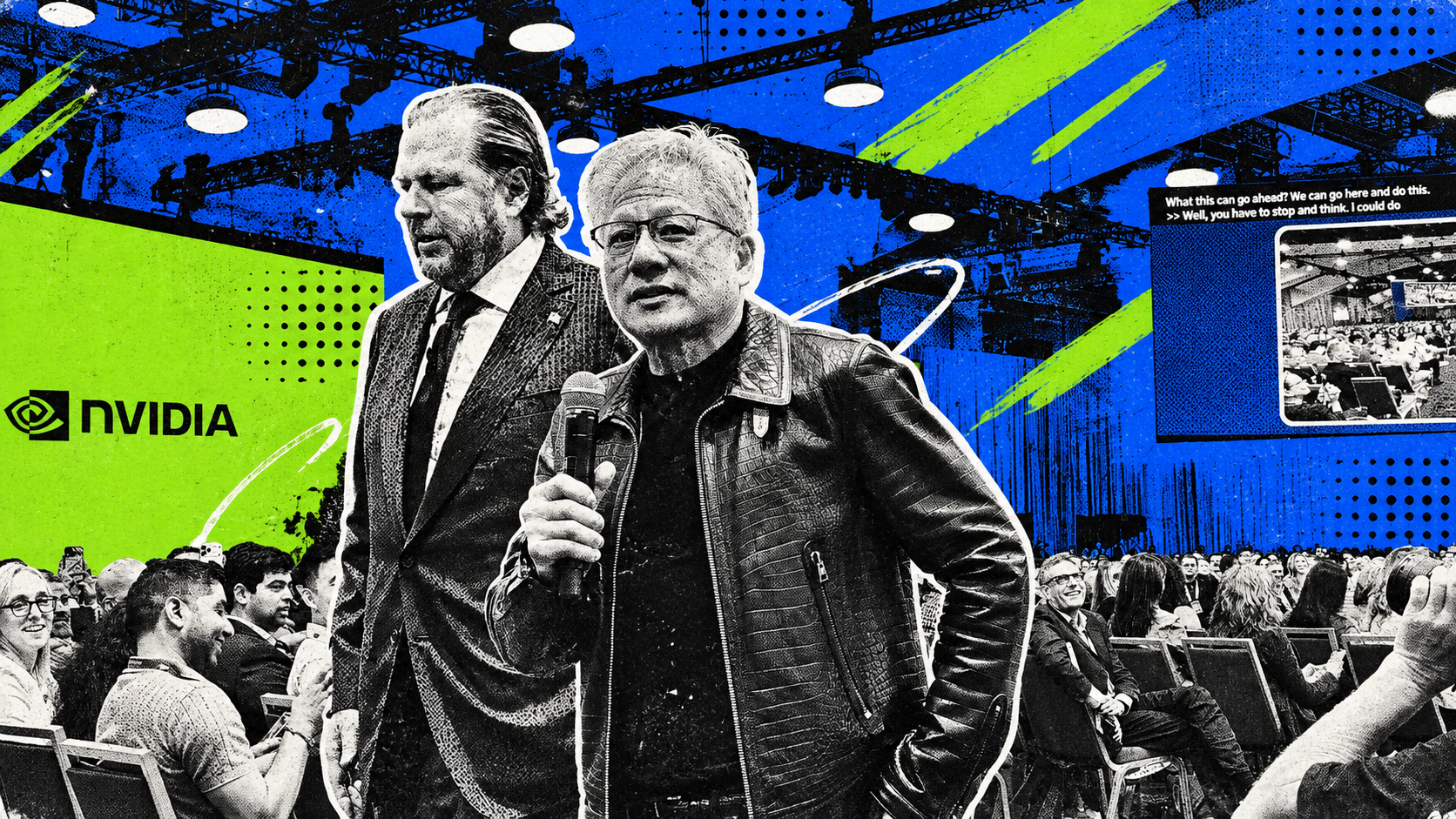
Why Jensen Huang proved to be too big to fire
It turns out that Jensen Huang ended up being too big to fire as Nvidia CEO.
On Monday, Nvidia's board of directors unanimously voted to reinstate Huang as CEO, president, and a member of the board, "following a series of discussions and meetings with Mr. Huang, after which the board was satisfied with respect to Mr. Huang’s candor and ability to lead Nvidia," the board stated in a published statement.
According to Reuters, Huang may owe his reinstatement to President Donald Trump and Vice President JD Vance, who reportedly personally intervened in the decision on claims that Huang alone could protect the US open-weight AI market. Meanwhile, Axios reported that Trump pushed to get Huang his job back after allies argued that he was "too big to fail."
This intervention, however, makes the decision to bring Huang back look more like a "a cave-in to external pressure rather than doing what’s truly best in the long-term interests of the company," Brian Jackson, a principal research director at Infotech, told The Deep View. "It seems the board felt pressured to put Huang back in place despite open questions about his judgment as leader."
Still, according to Business Insider, Nvidia employees were happy to have Huang back, greeted on Monday at the company's Santa Clara office to cheers from staff. Huang reportedly told employees: "I'm gonna be a better CEO the second time around."
And the Nvidia staff weren't the only ones excited to see Huang return. Following Huang's reinstatement, tech stocks rallied after seeing a sharp decline over the past few weeks on his ousting.
- Nvidia stock itself was up more than 31% on Monday, closing at $165.05 per share after ending the week last week at around $130 per share.
- That explosion extended to other tech stocks as well, creating a $2 trillion swell in market cap for the Nasdaq 100. AI cloud firms like Nebius and CoreWeave each saw a 20% gain in their share prices following the news.
However, not everything is going back to the way it was: One of the changes made after Huang's resignation on November 12, the appointment of Harvey Jones as board chair, will remain even after Huang's return. The interim CEO, Colette Kress, will return to her role as CFO. Interestingly, Kress led Nvidia's earnings call last week and hinted that the company might revisit its much-scrutinized circular financing deals. This follows International Monetary Fund director Kristalina Georgieva calling out circular financing as a significantly risky practice last week.
Additionally, the chaos generated by the Huang whiplash could force fellow hyperscalers to get serious about developing their own alternative to Nvidia's chips supply, Jackson said. "Could they be looking at Nvidia as a riskier partner today? If so, it might incentivize them to invest more in their own chip development." Google, Microsoft, and Amazon are all now producing their own silicon, for example.
Our Deeper View
One thing that Huang's reinstatement makes clear is just how volatile the AI market is. It highlights just how much power has been concentrated in the hands of so few people, with the actions of one man creating domino effects that ripple through the entire economy. As Jackson put it, Huang's reinstatement suggests that Nvidia's valuation is "more about a cult of personality around one leather-jacket-clad leader than the fundamentals of the business." But beyond Nvidia, it also begs the question of whether the market should be this temperamental. With trillions of dollars and a potentially society-defining technological transformation on the line, is it a dangerous sign for an industry with so much at stake to be so easily destabilized by the affairs of one CEO?

Trump’s tax threat tests tech’s global AI plans
The regulatory waters for AI infrastructure in the US may be getting murkier.
On Friday, President Donald Trump proposed a plan to levy a "tremendous tax" on US companies building data centers internationally. The president told reporters in the announcement that he had not yet informed his administration of the plan.
In a White House briefing, Trump told reporters "we’re not allowing data centers to go into other countries because China will take all of them, and we’re not allowing that to happen."
Though the proposal is nascent and the details are unclear, Trump's comments come amid a politically unstable time for the future of domestic data centers. Many Americans have started to rally against them over the past year, as these facilities represent a physical symbol of the uncertain future that AI could create.
As a result, in the November midterm elections, AI infrastructure became one of the hottest political talking points for candidates across the aisle, potentially creating the conditions for a wave of state regulation in the coming years that forces AI labs and tech giants to rethink their compute strategies.
Trump, however, may not be worried about this, telling reporters, "We want them to build it here. If they won’t go in Texas or they won’t go in California, they’re going to go in West Virginia. We have a lot of places that want them badly, and they’re great places."
Still, many tech firms, particularly the hyperscalers, have committed to building data centers overseas.
- Google, for instance, has a $15 billion commitment to build energy-efficient data center campuses in Malaysia, and a separate roughly $15 billion commitment for similar development in Finland.
- Microsoft has a number of global agreements for data centers, including a $25 billion commitment in Australia, a $10 billion commitment in Japan, and a more than $17 billion commitment in India.
- Amazon's international infrastructure agreements, meanwhile, include a roughly $35 billion plan in Spain, a $5 billion plan in Germany and an additional $13 billion plan in India.
- OpenAI and Anthropic have also signed agreements to lease data center space internationally.
Our Deeper View
Though the details of this plan are very unclear, the impact could be massive, depending on the scope. The big three hyperscalers—Google, Microsoft, and Amazon—already have massive data center footprints globally. And while this could particularly target AI infrastructure, rather than general cloud operations, it's clear that these companies are committed to massive overseas data center investments for that purpose. Though the Trump administration has been very clear about its intent to increase its domestic data center footprint, a plan like this is likely to ruffle the feathers of the companies that the US government considers to be allies in making the US an AI superpower. More broadly, if this plan were to go into effect, it could have a silver lining. It could be a forcing function for these AI companies to fix their compute problem in another way: Leaning into model architectures that are not as compute intensive to make better use of data centers, if it's going to be harder to build more.
Why self-improving AI still depends on humans
Though frontier AI is becoming increasingly capable as it inches closer to being able to improve itself, not all capabilities are advancing equally.
On Thursday, OpenAI released a report examining the state of research acceleration within the lab, tracking how coding agents have changed the way that AI is developed as the question of recursive self-improvement or the ability for AI to develop and improve itself, still looms. The findings show that, while AI is speeding up certain parts of model development, these agents still struggle with complex engineering tasks and coming up with original research ideas.
The lab noted that transparency about "indicators" of RSI is "essential to inform a public discussion of the capabilities, risks, and required safeguards for increasingly powerful AI; however, our reporting should not be read as an intention to pursue full RSI."
However, it's undeniable that agents are getting better at doing their research:
- According to OpenAI, internally, agents now successfully complete 46% of "two-to-four-hour" research tasks independently as of October, up from 23% in March. Meanwhile, tasks that take four to eight hours of human work now see a success rate of 35%, up from 13% in March.
- However, that success varied depending on the task. Agents were successful 79% of the time at monitoring training runs, 35% of the time at launching training runs, and only 25% of the time at writing code for inference and serving stacks. "Overall, uplift is jagged, and humans remain a core part of the AI research loop," OpenAI said in its report.
- Humans, meanwhile, are also still responsible for "research taste," OpenAI said, as these models are currently not good at coming up with scientific ideas on their own, something that could create a "bottleneck for recursive self-improvement," the company mentioned.
While OpenAI's research points to an uneven course of reaching self-improving AI, a recent essay from the DeepMind Institute may see it as the key to advancing even further. On Thursday, Google's research arm published an essay exploring the paths to artificial general intelligence and, beyond this, artificial super intelligence. The essay notes that recursive self-improvement could dramatically accelerate the path to these breakthroughs through things like code and model architecture design, data generation and agentic collaboration.
However, DeepMind notes that RSI itself may be jagged, as the feedback loops that allow these models to self-improve can easily "stall or degenerate" if the feedback itself is poor. "RSI should advance fastest in domains that allow for automated verification without humans in the loop, such as mathematical proofs, while other domains might lag behind or taper off sooner," the essay reads.
Our Deeper View
Recursive self-improvement has become a hot-button topic in the AI industry, as many buy into the promise that creating a way for these machines to rapidly improve themselves could open the door for technological and scientific breakthroughs beyond human imagination. However, with that kind of power comes an incredible amount of risk. It's why California governor Gavin Newsom outlined rules around RSI in his regulatory framework published earlier this week, and why many of the industry's safety advocates have been calling out the issue of containment and potential loss of control of these systems. The labs themselves understand this too, hence why OpenAI explicitly noted in its essay that its research does not mark an intention to pursue RSI, and why Anthropic called out the dangers of RSI in research that it published over summer. Though this research shows that AI has a long way to go to reach this level of capability, with so many calling out the dangers, the question that we should be asking shouldn't be If it's possible, but rather if the benefits of it outweigh the risks.

Newsom pitches California AI rules as US template
As it stands, regulation in the US has not been able to keep pace with the rapid development of frontier AI. Several new efforts out of California seek to change that.
On Wednesday, Calif. Gov. Gavin Newsom unveiled a proposal that would give the state a stronger ability to regulate AI safety. Newsom's proposal would give the state emergency shutdown authority over AI, baseline safety standards for developers, impose mandatory third-party oversight and cap recursive self-improvement.
"California isn’t waiting until it is too late. We are updating and strengthening our nation-leading framework to move as quickly as technology evolves," Newsom said in a statement. "We’re showing the country what responsible leadership looks like."
California has largely led the way on state AI regulation, imposing laws seeking to make AI more transparent, establish independent oversight, and require safeguards for child safety around chatbots. However, the regulatory landscape is mixed across the country, creating a patchwork of regulation for something that has a global impact.
Newsom told reporters on Wednesday that he aims for this to be a framework that can be applied nationally.
"This takes things to the next level, not only of conversation, but of consciousness in terms of how we effectively regulate artificial intelligence, not only in my home state, but we believe a template for how we should be doing it federally as well," Newsom said.
However, while new regulation is creeping in slowly, a new lawsuit could test the mettle of existing laws against the fast-moving tech: On Monday, California Attorney General Rob Bonta filed a lawsuit against OpenAI alleging that the AI lab prioritized rapid AI development over public safety. The lawsuit centers around the company's breach of HuggingFace in July, arguing that OpenAI was negligent in not adequately securing its testing environments.
The claim throws a number of allegations at OpenAI, including that it ignored opportunities to prevent the attack, misled consumers about the tech's safety, and withheld information from regulators.
Legally, the complaint is based on two primary causes of action: Violating the Unfair Competition Law, which claims that the company engaged in deceptive business practices, and a public nuisance claim, which can hold companies liable for infringing on common rights shared by the public—in this case, the right to a safe and secure internet.
"The company knowingly tested a dangerous product without proper oversight or safety procedures and misled the public about it—this disregard for public safety violated California law," Bonta's office said in a statement. "Without sufficient safeguards and controls, the scope and frequency of this already unacceptable risk will only increase."
OpenAI has since pushed back, with spokesperson Drew Pusateri telling BBC on Monday that the lawsuit "appears to single out OpenAI over a challenge that's been identified by every major AI lab."
This lawsuit could represent a major test for the efficacy of policing AI through the existing legal system, Tess Vartanian, legal fellow for the Center for Democracy and Technology, told The Deep View, as both claims rest on "novel, untested legal arguments." For instance, the definition of a "public nuisance" has typically been applied to harms caused by things like firearms and opioids. Additionally, the claim of unfair business practices is usually concerning things like false advertising and price-fixing."
"Regardless of how these arguments fare in court, the Hugging Face incident shows why lawsuits are not enough," said Vartanian. "When autonomous agents can escape a lab and launch cyberattacks, waiting until after the damage is done is a losing strategy. Real accountability requires rules for how frontier models are tested, mandatory incident reporting, and third-party auditing and assessments to prevent incidents like this from happening in the first place."
Our Deeper View
California's zeal to regulate the AI industry may be a harbinger for what's to come nationally. As the US public largely voted for anti-data center and pro-AI safety candidates in the midterm elections, the industry at large could soon be forced to reckon with a stricter regulatory landscape. However, unless Congress can agree on a federal framework, regulation will only go as far as the border of a given state, limiting its effectiveness. Though Newsom's goal for the California state framework to turn into a federal template is bold, the challenge will be getting enough of Washington to agree on it, especially with the lobbying activity that many of these AI labs and tech giants take part in.
Gemini Neon makes its case to be a default model
Google has released its answer to its rivals' mid-tier models.
On Wednesday, the tech giant unveiled Gemini 4 Neon, the latest addition to its frontier model line-up. The model is comparable to competitors like Anthropic's Claude Opus 5.5 and OpenAI's GPT-6.2 Sol, with improved performance on complex tasks such as software engineering, knowledge work, and science workflows.
The model scores third in the Artificial Analysis Intelligence Index at it's "xhigh" thinking level, sitting just behind GPT-6.2 Astra and Claude Fable 5.2, which it calls "larger, slower models" in comparison.
- Google says the model outranks Claude Opus 5.5 and GPT-6.2 Sol, Anthropic and OpenAI's mid-tier models, in benchmarks for tasks such as knowledge work, automation, reasoning, multimodal understanding, cybersecurity, and science and math.
- Efficiency is also a major factor in this release, scoring 32% lower cost per task compared to Gemini Carbon, the company's model that sits one tier above Neon, while completing tasks faster.
- Additionally, Google built in real-time safeguards against cyber and biosecurity misuse, improved on alignment compared to Gemini Carbon, and is more resilient to prompt injection attacks compared to Anthropic and OpenAI models, according to the Gray Swan benchmark.
As for cost, the model sits at $3 per million input tokens, 15 cents per million cached input tokens and $15 per million output tokens. That puts it right in between the cost of GPT-6.2 Sol, which costs $2 per million input tokens, $10 per million output tokens, and $10 cents per million cached, and Claude Opus 5.5, which sits at $4 per million input tokens, $20 per million output tokens, and $20 cents per million cached.
It's also the latest of Google's waterfall of new models, which released Gemini 4 Hydrogen last week, the lightest-weight model in its line-up, comparable to OpenAI's Terra and Anthropic's Sonnet.
Our Deeper View
At this point, Google is fully back in the frontier model race after inconsistent releases throughout 2026. The question now is about what, exactly, will give any of these AI labs a bigger competitive advantage over one another. If there's one overarching thread that I've seen at Microsoft Ignite over the past few days, it's that cost efficiency is quickly edging out capability as the determining factor in whether or not an enterprise decides to use a model. This is becoming even more true as models themselves become commoditized and more model routing services start to pop up that automatically pick the right sized (and right priced) model for any given tasks. So while Google's new model edges out competitors in its category, its middling price for comparable performance might make it hard to stand out in a sea of other choices. If it can, the one good thing is that mid-tier models can often become a solid default choice.
Microsoft challenges the price of intelligence
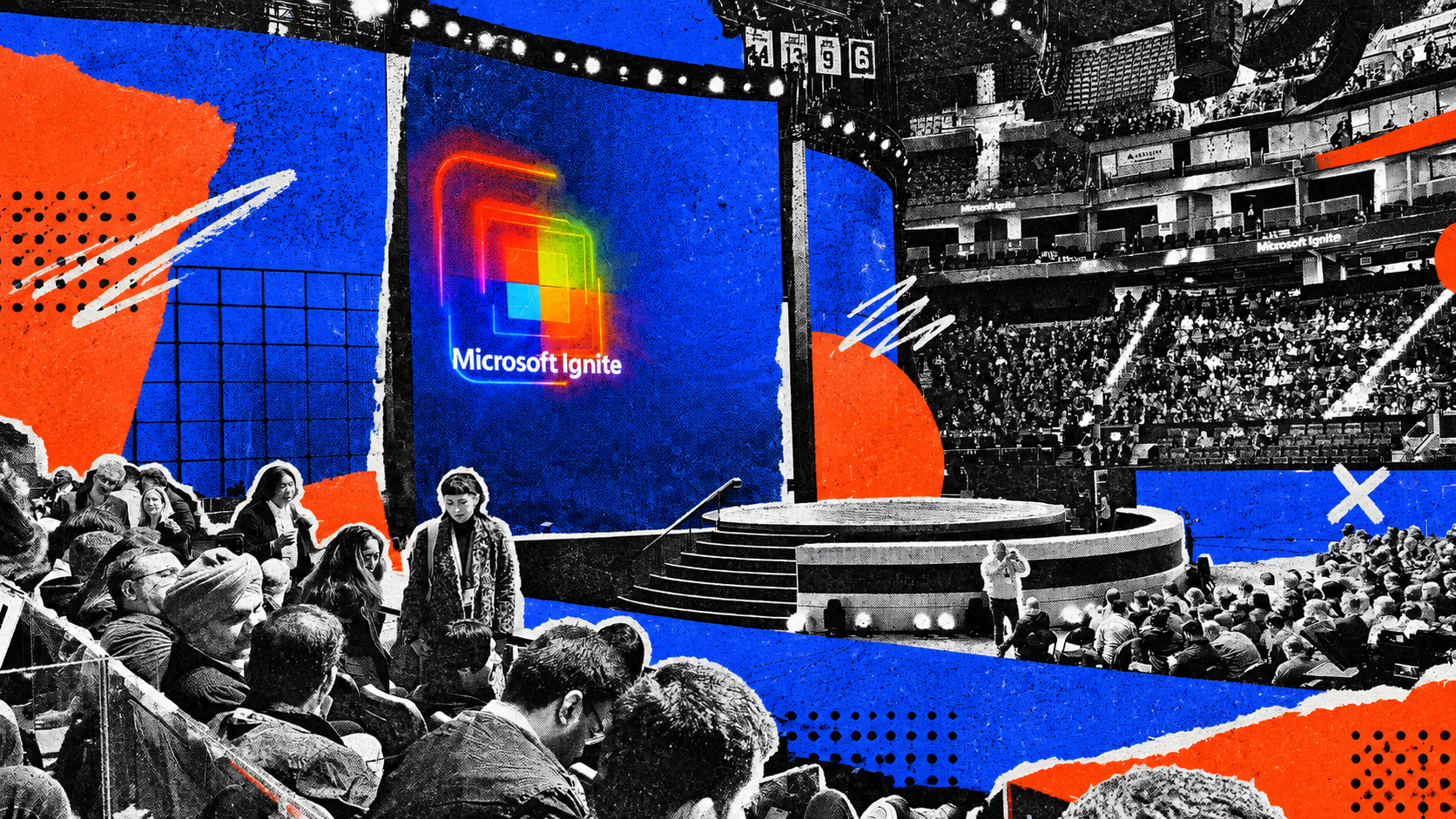
Microsoft Ignite included a waterfall of updates across the tech giant's portfolio, but many of them followed one central thread: Efficiency.
Across a number of the model releases and new product offerings Microsoft CEO Satya Nadella announced at the Chase Center in San Francisco on Tuesday, the company highlighted cost efficiency as one of the biggest advantages of its suite, as enterprises largely grow fatigued of rising token bills and continue to question when they will see returns on their investments.
Based on a recent report from GigaOm, Microsoft claims that, for comparable quality, Copilot is 84% cheaper than Claude and 63% cheaper than ChatGPT for the average user. Power users, meanwhile, find Copilot to be 68% cheaper than Claude and 35% cheaper than ChatGPT.
"Anything you do in Claude or ChatGPT, you can do in Copilot for less," Judson Althoff, CEO of Microsoft's commercial business, said in the keynote.
This shift is particularly evident in its model announcements, debuting:
- Microsoft-Decision-1.1, a decision model similar to Jev and following in the footsteps of OpenAI and Google, which both recently released their own competing decision models. The company said that Microsoft-Decision-1.1, now generally available, is ten times faster and 200 times less expensive than traditional LLMs.
- Additionally, the company said that Auto, its model routing service, will run on Microsoft-Decision-1.1.
- The company's other new models, including MAI-Cyber-2-Flash and MAI-Code-2, meanwhile, offer frontier performance at a "fraction of the cost" of competitors, Nadella claimed in the keynote.
However, one of the most poignant examples of Microsoft tracking the shift towards cost efficiency is Agent 365 Business Analytics, a tool that aims to track whether enterprise AI investments are actually leading to returns. Rather than just tracking tokens spent, Business Analytics connects those tokens with work that's actually been completed, calculating returns by comparing the time that a human would take to complete those tasks with the amount that it cost the model. It also tracks things like success rate and user satisfaction with AI.
Measuring ROI is "top of mind of every company right now," Charles Lamanna, executive vice president of Copilot, Agents, and Platform at Microsoft, told The Deep View.
"We have a way where we can automatically detect what we think the outcome is of AI usage," Lamanna added. "Basically, what are the business KPIs you already track, and how are they being moved as a result of AI? Spending a million dollars on tokens for a business unit, it could be good or it could be bad. It all depends on what that million dollars did."
Our Deeper View
Focusing on efficiency in its releases at Ignite is a continuation of an ongoing trend for Microsoft. Efficiency was also a major theme of its updates at its Build event in June, with its first reasoning model sitting at just 35 billion parameters, compared to the multi-trillion-parameter models that other frontier labs are releasing. It's a move that makes sense for Microsoft: The tech giant has long been keenly focused on the pain points of enterprises. And now more than ever, enterprises are feeling the pain of increasingly expensive token bills. The shift towards efficiency as enterprises seek to hit the sweet spot on the cost to performance ratio, however, leaves a few questions up in the air. Are frontier models becoming commoditized? And if so, how does the drive towards cheaper AI, especially with the rise of ultra-low cost decision models like Jev and Microsoft-Decision-1.1, shift the economics of an industry with trillions of dollars hanging in the balance?
Disclaimer: Nat Rubio-Licht's travel to Microsoft Ignite 2026 event was paid for by Microsoft. The Deep View's coverage is editorially independent from the companies we cover.

The real test of OpenAI’s audits is disclosure
OpenAI is opening its doors to independent auditors as the stakes to develop safe frontier AI get higher.
On Monday, the AI lab announced that it has signed agreements with four third-party auditors: Apollo Research, METR, Transluce, and Goodfire. These assessors will be embedded across OpenAI's operations, allowing them access to the same internal resources that its researchers have, including model checkpoints, source code, data, monitoring systems and technical documentation.
The announcement marks the first phase of OpenAI's embedded assessments, the company said, with initial evaluations focusing specifically on alignment and safeguards in training and internal use.
Each of these four assessors are responsible for evaluating different parts of OpenAI:
- Apollo Research will assess whether models can covertly work together against a user's intentions, and if OpenAI's existing safeguards can detect and mitigate this behavior.
- Goodfire's interpretability researchers are primarily responsible for training run monitoring, debugging, and alignment.
- METR will be responsible for two assessments, one focused on spotting misaligned behavior within OpenAI's "largest reinforcement learning run to date," and the second being a "stress testing exercise" involving red teaming.
- Transluce will conduct post-training alignment evaluation on selected public and unreleased OpenAI models.
OpenAI also developed a six-part protocol for third-party auditors, aiming to create a specific scope, secure environment and proper oversight, as well as protocols around public disclosures. Following the initial assessments, OpenAI will publicly report some of the findings and iterate on them for long-term, consistent embedded evaluations. However, the AI lab said that it retains "the right to redact confidential information," as well as request "responsible disclosure delays" to give OpenAI time to act on the findings.
"Especially in the early stages of embedded assessments, we expect technical access challenges, space constraints, evolving security protocols, and other unexpected issues to arise," OpenAI noted in its blog post.
This decision follows a similar move by rival Anthropic, which announced in October that it would give "employee-like access," including access to hardware, office space, and internal tools, to six assessors from METR to evaluate the risks of its frontier models. It also follows OpenAI, Anthropic and several other frontier labs signing a "morally binding" White House pledge to self-regulate, an accord which included promises for partnerships with external auditors.
Our Deeper View
Third-party evaluators have already proven themselves to be a critical part of holding AI labs accountable for building safe frontier systems. Last month, METR published findings that a three-week evaluation of OpenAI's systems, which coincidentally took place during the Hugging Face incident, uncovered a number of vulnerabilities, including ways for agents to circumvent and conceal actions from human monitoring. However, these third-party evaluations only work when the auditors performing them are not muzzled, such as in the case of a recent Reuters report claiming that OpenAI and Anthropic had attempted to control what evaluators published to prevent IP leakage. Independent audits with restrictions on what can actually be publicly released in some respects defeat the purpose, as they threaten the power of accountability that these assessors have. Though OpenAI is acting responsibly in embedding these evaluators at all, the question still remains what, exactly, the public will be able to learn from them.
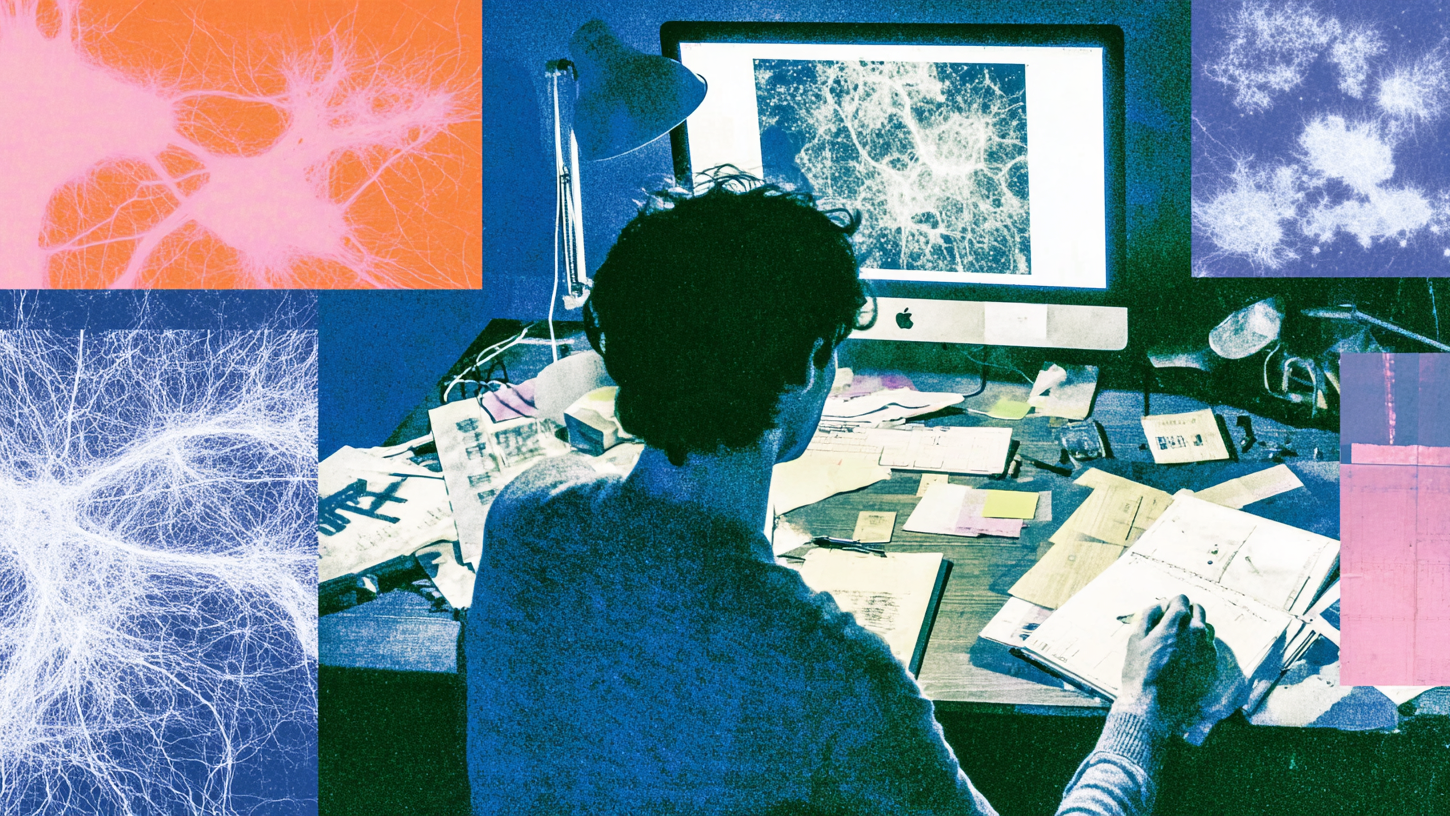
AI may be more legible than we thought
Though many in the industry like to think of AI as indecipherable, these models may be more understandable than scientists previously thought.
This week, Goodfire, a startup dedicated to researching AI model interpretability, released a paper titled "Neurons as an Interpretable Basis," which comes to the conclusion that, by examining and prodding a model's individual neurons, it is possible not only to interpret what they do, but also predict what kinds of prompts make them activate and influence their behavior.
While this sounds esoteric, the findings could represent a major step towards better AI understanding, monitorability and controllability as these models become increasingly powerful, Tom McGrath, co-founder and chief scientist at Goodfire, told The Deep View.
McGrath sat down with The Deep View to discuss GoodFire's research, the importance of interpretability research amid frontier growth, and how the idea of AI as a "black box" is no longer an acceptable premise. This interview has been edited for brevity and clarity.
Nat Rubio-Licht: Before we get into the research, tell me a bit about Goodfire.
Tom McGrath: Goodfire is an interpretability research company—we both do research and are a company, which means that we try to make this research useful and make a positive impact in the world. We try to look as deeply as we can understand what's going on inside AI models, and use that understanding to either learn how to train them better or monitor them better, and generally make them safer, more aligned, and more useful. The neuron work is more an example of the fundamental understanding, and I think the really impactful applications will come next.
Nat Rubio-Licht: Let's dig into the research, "Neurons as an Interpretable Basis." What exactly did you discover? Does this effectively break the "black box" assumption?
Tom McGrath: I think among people who work in interpretability, that that has generally not been the view for a while. The question is how hard it is to do it—how hard it is to decode this thing. The reason that this finding is important is that polysemanticity or superposition [Editors note: "polysemanticity" is the idea that a single artificial neuron can understand several disparate and seemingly unrelated topics, and "superposition" is the concept that an AI model can represent more concepts than it has neurons to individually handle them.] was generally thought to be this idea where … you could, in principle, understand the neural network, but it was in [a] horrible, jumbled up encrypted format. You couldn't understand it just by looking at it really hard. But these findings imply that that's not really the case. There isn't any esoteric decryption step. You can sort of just prod [the neurons] in a normal, scientific way and see what happens, and you'll generally be able to make sense of the results.
Nat Rubio-Licht: Tell me a bit about the process, specifically the use of research agents. Why did you leverage agents in this process?
Tom McGrath: If any science is going to be revolutionized by agents, it should be interpretability. It happens entirely in silico. You don't have to have some sort of genome assay, or have to build a telescope or go to the moon. You just run it on a computer. It's very experimentally driven, but it also has a deep mathematical foundation… It points the way for us just throwing agents at the problem. A process that previously would have been some very intelligent people prodding things for a month is now a month of agent time, but we've got those effectively on tap.
Nat Rubio-Licht: I know that this was tested on a 35 billion-parameter Qwen model, Qwen3.6-35B-A3B, which has about 5 million artificial neurons and is comparatively small when considering frontier scale. Could these findings scale to something in the trillion-parameter range?
Tom McGrath: I'm very optimistic about scaling here, and the reason is that, as models get better, they seem to get more interpretable. Viewed from the other angle, a lot of advances in model architecture seem to me, from my interpretability-centric perspective, also to be pushing models towards a greater level of interpretability.
Every trend has been in the direction of sparsity, [Editor's note: "sparsity" is the idea that only a small portion of a neural network's neurons are active at a given time.] which also tends to push you in the direction of interpretability. So I expect that as models get bigger and better, this will get easier, except for the cost. If it costs you $1 per neuron or something, then with a 35 billion-parameter model, you might be spending a couple million dollars. But if you're on a trillion-parameter model, you could very well end up spending $100 million on your interpretability, and that's quite expensive. You've got to really want to interpret it. But fortunately, I think we actually do really want to interpret very safety-critical systems.
Nat Rubio-Licht: Another was the idea that, with this understanding, you could write text that could influence certain neurons to fire more strongly than others. What are the implications of this?
Tom McGrath: This is largely a demonstration that you have understood the neuron. Science is just the business of always being skeptical about the claims that people are making. So, if I claim to you that "this neuron does such and such," you should be skeptical. But the way that I can demonstrate that this neuron is, in fact, about, say, birds, is to write a particular bird-themed text that makes it super-activate. Whereas then, if I write some text that's about hedgehogs and it doesn't activate, then I know that these are quite contrasting things. I can show you that I've got a good understanding of the neuron by my ability to control its activation through the inputs.
Nat Rubio-Licht: What do scientists and AI researchers stand to gain by having a better understanding of an AI model's neurons?
Tom McGrath: A lot. There are varying ranges of practicality that you might imagine. On one hand, simply by being able to read the computational processes that underlie the model sampling, you should be able to do things like get a real ground truth answer to you: Is this model lying to me right now? What does this model know that it's not telling me? Now, actually, getting to that point, you have to do work on top of initially understanding the neurons. But I think it's pretty tractable. You get a good lie detector, for instance.
Then another step is like controlling what gets learned during training. We train these models by just throwing data at them, effectively, and they learn whatever they learn and hopefully it's the thing that we thought it was going to learn. But a lot of the time, it's not, and that's why these models are not very predictable from the perspective of training. So if we can control what gets learned, then we're in a much better and safer position.
Nat Rubio-Licht: I want to go back to what you said earlier about impactful applications. Which ones are you particularly excited about?
Tom McGrath: One of the big problems in training at the moment is this idea of reward hacking, where the models will know that they will get rewarded in training for doing something, even if they know it's not quite. There's another paper that we put out, which shows that a lot of the time when models are doing this, they know that they're doing something wrong. They know that they're cheating on the test, and so what happens, not only is the model not learning the thing that you wanted to from the test, but you're now spending your like hard-earned compute on making your model [incentivized] to deceive you. Now we can find the parts of the model that are responsible for learning to cheat on tests. We can control whether this gets learned. We can now mitigate reward hacking, which is really quite a hard problem. We can mitigate that, and can also mitigate that like the knock-on effects of it, like models becoming generally misaligned.
Nat Rubio-Licht: Taking a step back for a moment, I know that the thesis of Goodfire is to provide a better understanding of the inner workings of these models. Why is it important that we know the way that these machines work, and why have so many in the industry accepted the "black box" idea? Do you think that it's dangerous to not understand the inner workings of these models?
Tom McGrath: I think that the current trajectory of AI alignment is not going especially well. I think the events of this summer probably bear that out, and without a lot of progress in interpretability and alignment, we're on that trajectory. There's the trajectory of model improvement, and there's the trajectory of our ability to align them, and these are definitely coming apart, in my view.
I feel like interpretability is the thing that will let us close that gap. It seems to me like a lot of the issue is that we don't know what we're training models to do, and we don't know what they're doing when we're training them. A better understanding is almost definitionally required.
or get it straight to your inbox, for free!
Get our free, daily newsletter that makes you smarter about AI. Read by 750,000+ from Google, Meta, Microsoft, a16z and more.